
Social Development
Social Development
Program Overview
The Junior Social Development Program offers a safe, caring, and supportive learning environment for students who benefit from targeted social-emotional and executive functioning supports as they begin and continue their high school learning journey.
Learner experiences are personalized, student-centered, and guided by student voice.
Student strengths, gifts and abilities are embraced.
Integration opportunities are supportive and focused on academic success.
Targeted literacy and numeracy support to help close learning gaps where needed.
Program Objectives
Focus
Junior Social Development is a Grade 8-9 program that focuses on the whole learner. The program promotes growth, development and self-regulation skills that helps students to become their best selves.

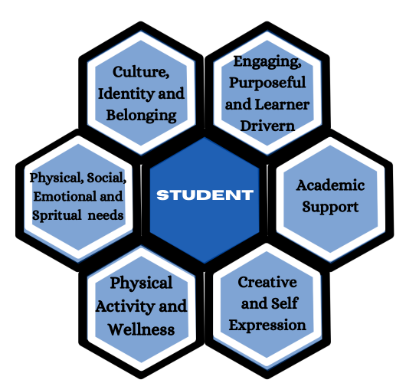
Goals
Improved functioning in the areas of the SEL competencies
Growth in literacy and numeracy skills
Integrate into mainstream for grades 10 + or an Alt. Program/ Specialized Program to meet more complex needs
Develop increased sense of confidence, direction, and purpose in their education
Increase in pathways to post-secondary education.
Fewer lates and absences.
Experience higher levels of academic achievement.
Build relationships in learning community
Achievement of goals through
Closing Gaps and Skill Development
Building student confidence
Embedding SEL competencies across all curricular areas
Upholding VSB Equity and anti-oppression practices and Culturally Responsive Pedagogy
Personalized Learning Plans
Ability-based supports
Supporting student “stretches” and growth
Using IEP as a tool to inform practice
Prioritizing student voice
Learner-Centered Approaches
Supporting identity awareness
Prioritizing student dignity
Engaging in meaningful and purposeful learning
Intentional Student-Focused Learning
Closing literacy and numeracy gaps
Supporting personal autonomy and self-actualization
Increasing overall well-being and SEL functioning
Engaging with Community and Culture
Developing an understanding of school success criteria
Exploring post-secondary pathways
Providing exposure to new learning experiences
Program Structure
Program staff include one teacher/case manager and Educational Assistants.
Junior Social Development supports up to 15 students across Grades 8 and 9.
Student schedules are personalized, with a blend of integrated classes and core academic courses taught by the Social Development Teacher.
Educational Assistants work closely with students, integrated classroom teacher and Social Development teacher/case manager. Educational Assistant allocation in integrated classes is dependent on individual need and priority is given to students who require safety supports.
Grade 8 Students
Have at least 3 integrated classes: Physical Education 8 and both Grade 8 rotations.
Typically take Social Studies 8, English 8, Science 8, Math 8 and SEL (Social Emotional Learning) through the Social Development Program
Grade 9 Students
Enroll in selected integrated elective courses and integrated Physical Education 9.
Depending on individual academic needs, students may enroll in Social Studies 9, English 9, Science 9, and Math 9 in an integrated classroom setting or through Social Development.
Enroll in SEL (Social Emotional Learning) through Social Development.
Students who are almost fully integrated are expected to retain one class in Social Development each semester to maintain a connection to the program and staff and to ensure they have regular check-ins to support continued success.
Collaboration With Teachers and Staff
The Junior Social Development team collaborates with classroom teachers to ensure curriculum is accessible and IEPs are effectively implemented
This includes:
Sharing strategies and best practices for supporting students with exceptionalities.
Adapting instruction, assessment, evaluation methods, and classroom routines.
Using a collaborative approach for supporting behaviour and success
In-class support is available and gradually reduced as students gain confidence and independence.